Tags
When I’m asked to repeat history, it doesn’t mean doing something that has been done before in the way that you are thinking. When I am asked it means that someone wants a copy of an older trophy oar and I have recently completed two such jobs.
One client wanted a duplicate of his great grandfather’s oar, the original being displayed by another family member. The other client was an Oxford college that was trying to build up its collection after a devastating boat house fire many years ago.
The University College oar was going to be a reasonably straightforward copy, even if not a straightforward job. The college already have an oar for me to duplicate (albeit in poor condition) they also had photographs of another copy in much better condition. This was the tricky part. The better copy was hanging on the wall of a pub in London and they were rather fond of it. They didn’t want to sell it or exchange it for a copy in a worse condition. They would, however, consider swapping their original for a well made copy. To make matters easier, I even managed to find a near perfect match oar to use.

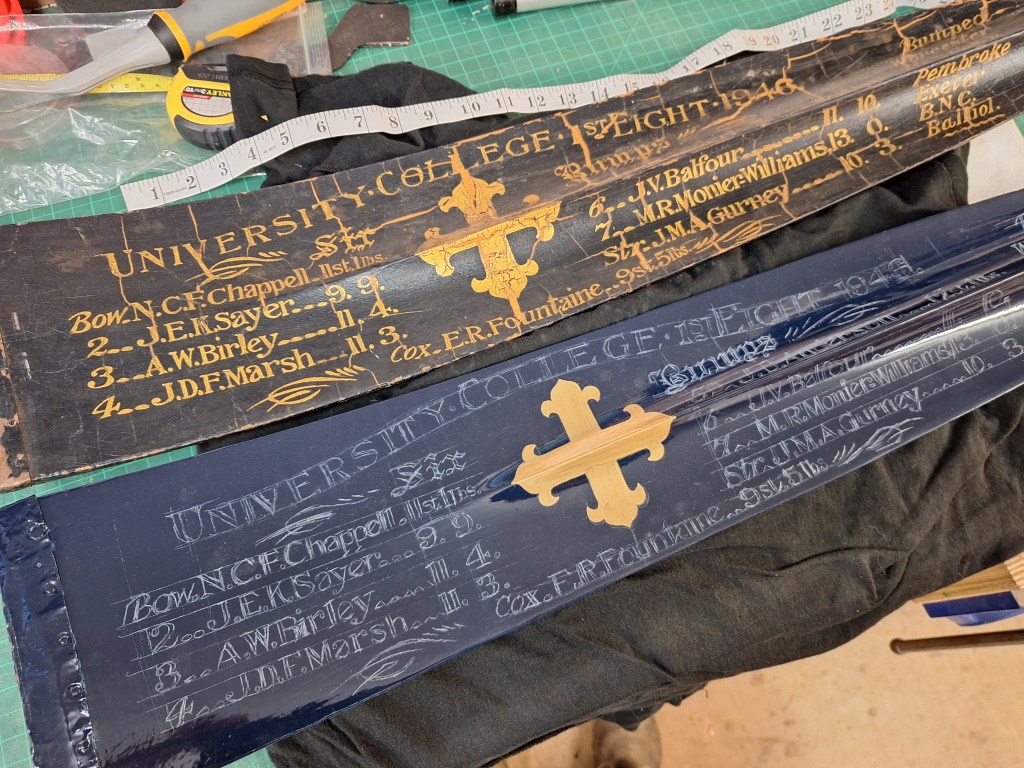
The other job was more difficult in a technical sense, since the original oars were much older and very much darkened by time. A couple of the crew details were even difficult to see.
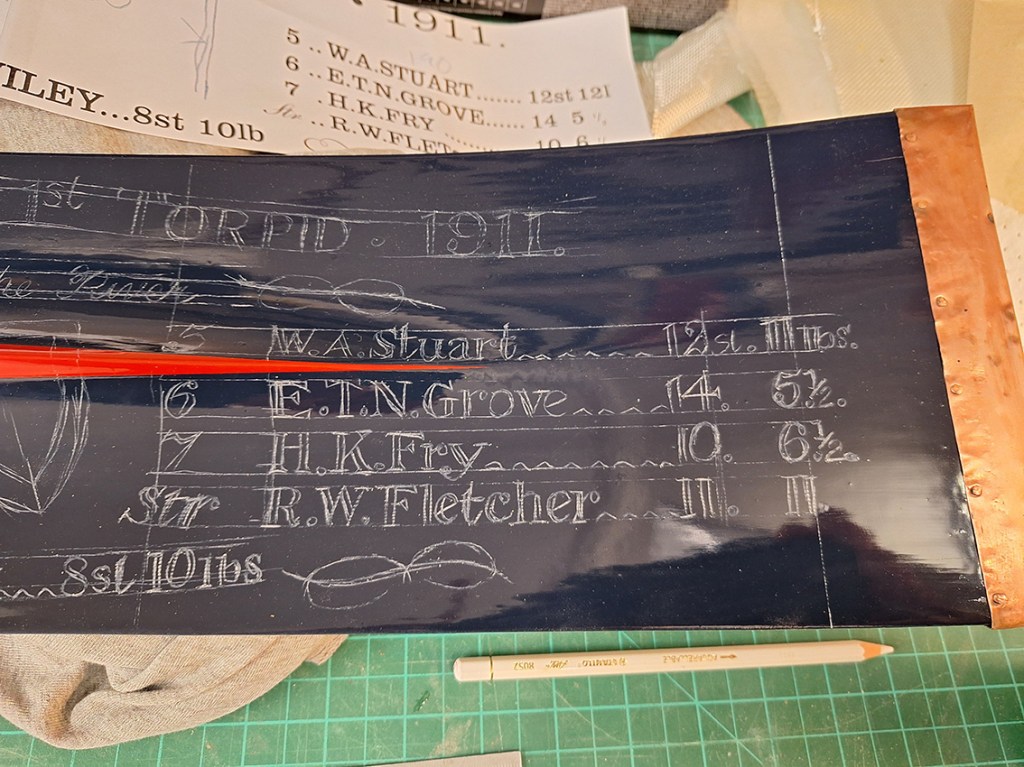
However, the client and I managed to mock up a suitable design using the information that we had on the two oars. We also had the added advantage that William O’Chee, a rowing historian (and regular contributor to the Hear The Boat Sing blog), was able to double check the crew and race details from his extensive library. Although William is a Brasenose College man, he could find the details for the Balliol crew quickly


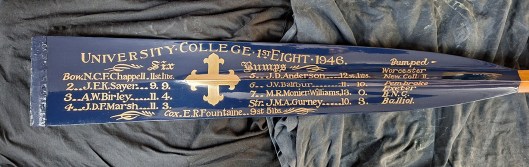
Both oars were completed. The pub was pleased with my work and now has a new old oar hanging on their wall, whilst the college has the original hanging in the new boat house. The Balliol oar is now hanging in a private study with pride of place.


 Trophy Oars